


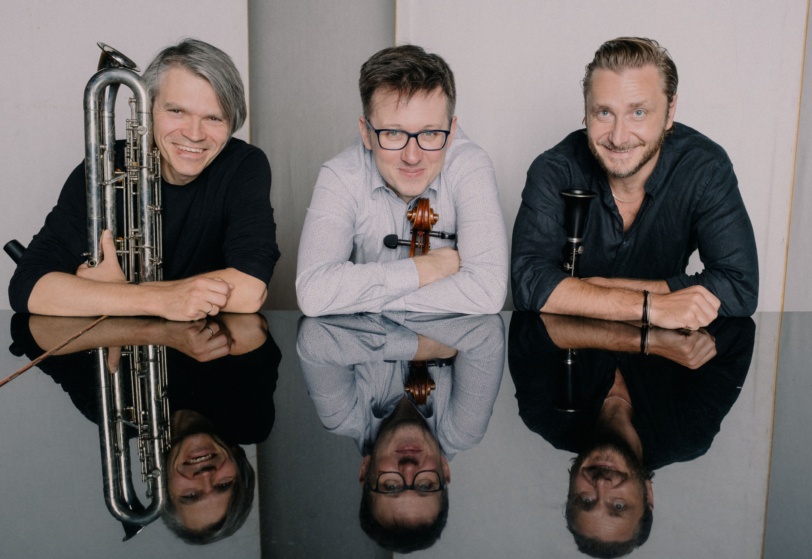
The ensemble was founded in 2017 by Paweł Szamburski (clarinet), Tomasz Pokrzywiński (cello), and Michał Górczyński (contrabass clarinet). The ensemble’s unusual instrumentation shaped the distinctive sound that has become its hallmark.
In a short time, the trio developed a highly individual musical idiom, which serves as a means of reimagining musical traditions while creating new compositions drawing on sources ranging from medieval and Renaissance polyphony to nineteenth-century Hasidic nigunim and traditional music from Portugal, Poland, Lithuania, and Belarus. These diverse genres and cultural influences are merely a starting point for the ensemble’s own compositions and improvisations – the early Baroque alla bastarda method is placed in a strikingly new context. In this way, musical traditions of the past are transformed into an original, deeply personal, and unmistakably contemporary artistic expression.
The success of Bastarda’s first three albums established the trio as one of the most compelling chamber ensembles on the Polish music scene. Their subsequent four albums comprise a series of unique collaborations between the trio and artists from Poland and abroad (including the Sutari ensemble, the Dutch Holland Baroque orchestra, or the Portuguese singer João de Sousa), which have been warmly received by critics and audiences alike.
In recent years, the ensemble has created new concert programmes on commission for festivals (including Warsaw Autumn, Unsound, and the Jewish Culture Festival in Grodzisk Mazowiecki) and cultural institutions (the Polish Film Music Composers programme arranged for the eighty-fifth anniversary of Polish Radio 2 or Faraon [Pharaoh] implemented for the Polish National Film Archive – Audiovisual Institute). For the music for the radio play Krakus by C.K. Norwid directed by D. Błaszczyk, the trio received a J. Hajdun Award at the 21st Two Theatres Festival.
Bastarda has also gained international recognition. Following the release of its debut album, the ensemble was invited as a partner of the international research project Sound Memories: The Musical Past in Late-Medieval and Early-Modern Europe carried out by leading European universities (Humanities in the European Research Area). The release of an album by the renowned Pentatone label, followed by concert tours in the Netherlands (including performances at such prestigious venues as Het Concertgebouw in Amsterdam), marked another important milestone in the ensemble’s international career.
The ensemble is associated with the Lado ABC and Audio Cave labels both through its recordings and as part of their artistic community.